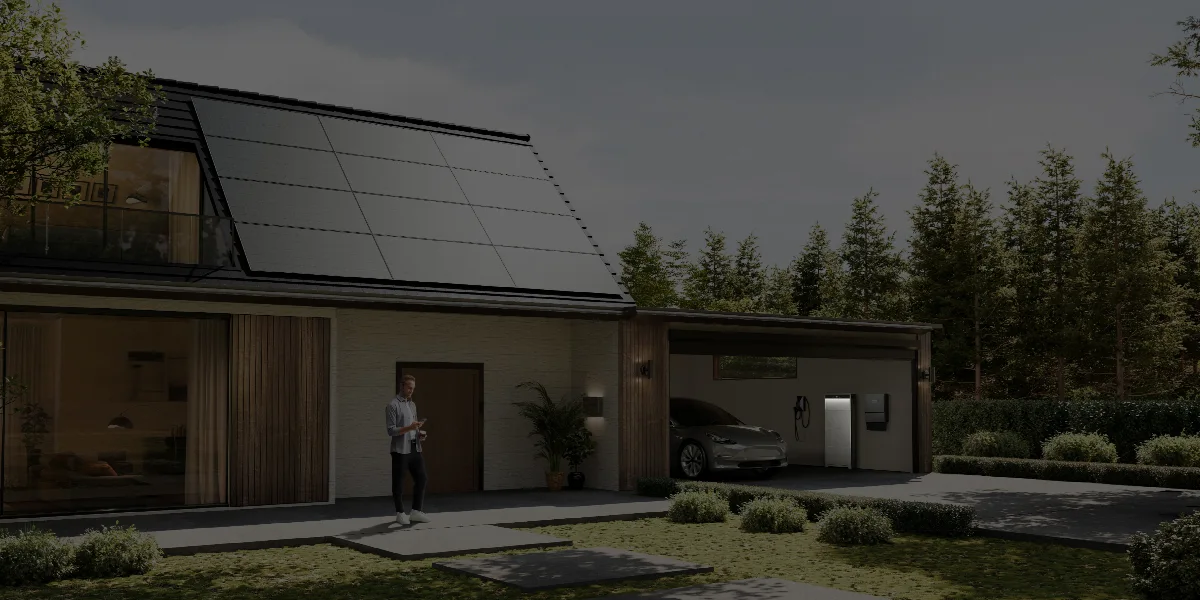
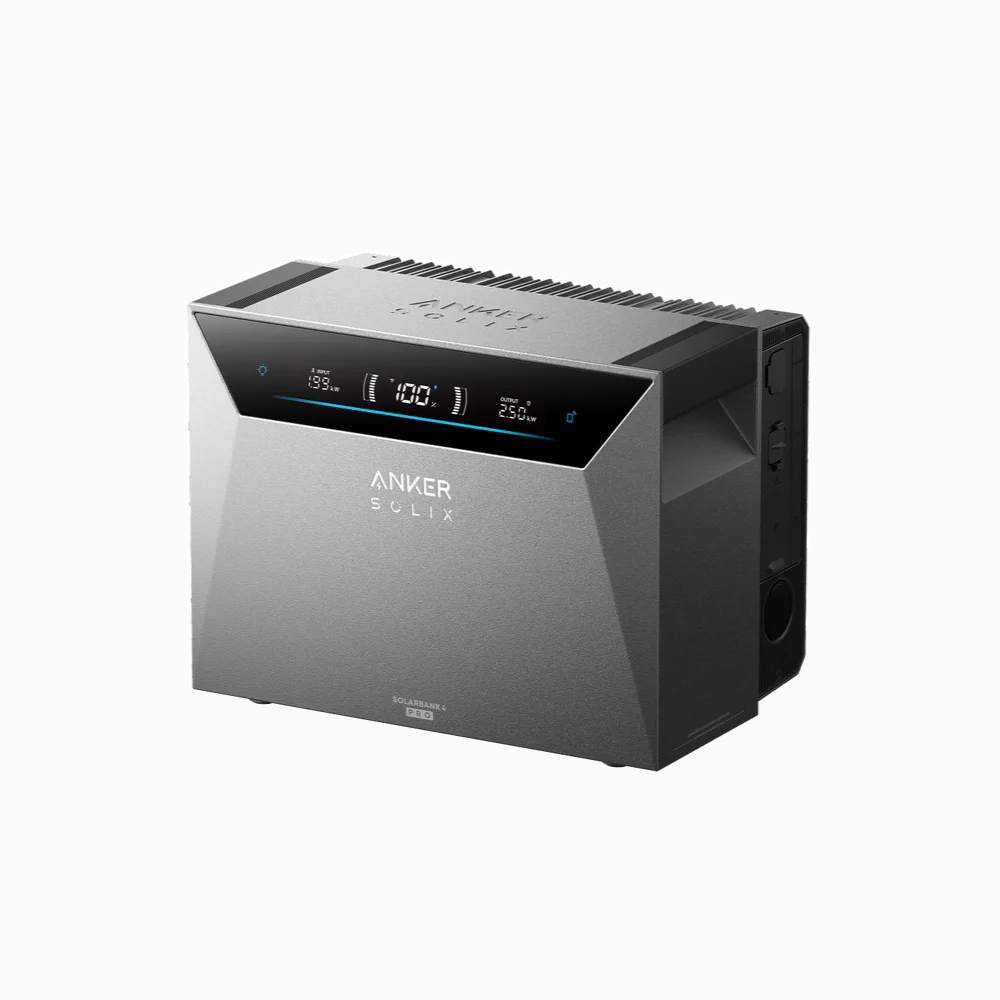
A solar panel without a battery is like having a generator that only runs when the sun is out. You get free electricity during the day, but you still pay full price every evening. A battery changes that. It stores the solar energy you do not use during the day and makes it available at night, on cloudy days, and during peak price periods.
How solar battery storage works
Solar battery storage follows a simple cycle. Understanding each stage helps you choose the right setup for your home.
- Generate. Solar panels on your roof convert sunlight into direct current (DC) electricity during daylight hours. Output peaks between 11am and 3pm in summer and is significantly lower in winter.
- Convert. A solar inverter converts the DC electricity from your panels into alternating current (AC) electricity your home can use. In a DC-coupled system, the battery connects before this stage. In an AC-coupled system, it connects after.
- Use or store. Your home uses electricity as needed for appliances, lighting and devices. Surplus energy that is not being used charges the battery instead of flowing to the grid.
- Discharge. When the sun goes down or your demand exceeds solar generation, the battery discharges stored energy to power your home. This typically covers the expensive evening peak between 4pm and 8pm.
- Grid backup. If the battery runs out, you import from the grid as normal. If the battery is full and you are still generating, surplus exports to the grid and earns you the Smart Export Guarantee (SEG) rate.
How these stages connect depends on whether your system is AC coupled or DC coupled. Each approach suits different situations.
| AC coupled | DC coupled (hybrid) | |
|---|---|---|
| Connection method | Battery connects after the solar inverter — separate battery inverter needed | Battery connects before the solar inverter — single hybrid inverter handles both |
| Best for | Adding a battery to existing solar panels (retrofit) | New solar + battery installations, or full system replacements |
| Efficiency | 88–93% round-trip (two conversion steps) | 94–97% round-trip (one conversion step) |
| Cost | £800–£1,200 extra for battery inverter | £1,200–£2,000 for hybrid inverter (replaces solar inverter) |
| Complexity | Higher — two inverters to coordinate | Lower — single system, single app |
| Flexibility | Mix and match any battery and solar inverter brands | Battery and inverter must be from compatible brands |
Battery storage by the numbers
The biggest impact a battery has is on your self-consumption rate — the share of your solar generation you actually use. Without a battery, you use roughly a third of what your panels make. The rest goes to the grid for a few pence per kWh. With a battery, those numbers flip.
Without a battery
| Self-consumption | 30–40% |
| Exported to grid | 60–70% |
With a 10kWh battery
| Self-consumption | 70–80% |
| Exported to grid | 20–30% |
Sizing a battery for your solar panels
The right battery size depends on your solar array and your household electricity use. A general rule is 1.5 to 2.5 kWh of storage for every 1 kW of solar panels. The table below shows typical recommendations.
| Solar array size | Recommended battery |
|---|---|
| 3 kW | 5–7 kWh |
| 4 kW | 7–10 kWh |
| 5 kW | 10–13 kWh |
| 6 kW | 13–15 kWh |
Seasonal variation matters too. In summer, a 4 kW array can generate 15–18 kWh per day — enough to run a home and charge a battery fully. In winter, the same array produces just 2–4 kWh per day, so you will rely more on grid charging or off-peak tariffs to fill your battery.
Use the battery size finder to get a recommendation based on your actual usage and solar generation.
Costs overview
Solar battery prices vary by capacity, chemistry, brand and whether you install at the same time as solar panels or as a retrofit. The table below shows typical installed costs including 0% VAT (prices checked July 2026).
| Item | Typical installed cost |
|---|---|
| 5 kWh battery | £2,500–£4,000 |
| 10 kWh battery | £4,500–£7,000 |
| 13.5 kWh Tesla Powerwall | £7,500–£9,000 |
| AC coupling inverter | £800–£1,200 |
| Hybrid inverter | £1,200–£2,000 |
| Full 4 kW solar + 10 kWh battery | £10,000–£14,000 |
The financial case
Whether a solar battery makes financial sense depends on your current setup, your electricity usage, and whether you are starting from scratch or adding storage to existing panels. Here are three common scenarios with realistic UK figures.
Scenario 1
Adding a battery to existing solar panels
You already have 4 kW of solar panels with no battery. You currently save roughly £425 per year on electricity and export the rest at SEG rates. Adding a 10 kWh battery costs around £5,500 installed.
| Annual saving without battery | £425 |
| Annual saving with battery | £800 |
| Battery payback period | ~15 years |
Scenario 2
New solar panels plus a battery
A full 4 kW solar panel system with a 10 kWh battery costs around £12,000 installed. You use 70–80% of your solar generation, minimising grid imports, and export surplus at the SEG rate.
| Annual saving from self-consumption | £800 |
| Annual SEG export income | £200 |
| Total annual benefit | £1,000 |
| System payback period | ~12 years |
Scenario 3
Solar panels only (no battery)
A 4 kW solar-only system costs around £6,000. You use about 30% of what you generate and export the rest. This is the cheapest entry point but leaves significant savings on the table.
| Annual saving from self-consumption | £425 |
| Annual SEG export income | £340 |
| Total annual benefit | £765 |
| System payback period | ~8 years |
Solar-only pays back fastest because the upfront cost is lower. But the battery scenarios deliver higher lifetime value because you are using more of your own energy. The best approach depends on your budget and how long you plan to stay in your home.
Battery lifespan with solar
Battery lifespan is measured in cycles — one full charge and discharge counts as one cycle. Chemistry is the main factor. Most modern home batteries use lithium iron phosphate (LFP), which lasts significantly longer than older chemistries.
| Chemistry | Typical cycles | Expected lifespan |
|---|---|---|
| LFP (lithium iron phosphate) | 6,000–10,000 | 16–27 years |
| NMC (nickel manganese cobalt) | 3,000–5,000 | 8–14 years |
| Lead-acid | 500–1,000 | 2–3 years |
Installation process
Installing a solar battery is a straightforward process for a qualified electrician. The full timeline from initial enquiry to commissioning is typically 2–4 weeks.
- Site survey. An installer visits your home to assess your consumer unit, existing solar setup (if any), available wall space, and meter type. They check whether your inverter is compatible and whether any fuse or cable upgrades are needed.
- Quote. You receive a detailed quote with the battery model, inverter requirements, labour, and total installed cost including 0% VAT. Most installers provide the quote within 2–3 days of the survey.
- Installation. The physical installation takes 4–8 hours for a standard AC-coupled retrofit. A hybrid system with new solar panels takes longer, typically 1–2 days. The installer mounts the battery, connects the inverter, and runs cabling to your consumer unit.
- Commissioning. The installer powers up the system, configures the battery management software, sets charging and discharging parameters, and connects the monitoring app. They walk you through the controls and answer any questions.
- DNO notification. Your installer notifies your Distribution Network Operator (DNO) of the new battery installation. This is a legal requirement in the UK but your installer handles it as part of the service.
Most of the time is spent waiting for the survey and quote. The installation itself is usually completed in a single day.
Maintenance
Solar batteries are largely maintenance-free. Unlike a boiler or a gas heater, there are no moving parts, no filters to change, and no annual service requirements. A few simple habits keep the system running well.
- Keep the area clear. Ensure the space around the battery and inverter is well ventilated and free from clutter, dust, and moisture. Most batteries are IP-rated for indoor or outdoor use, but good airflow helps thermal management.
- Monitor the app. Check your battery app occasionally to confirm it is charging and discharging as expected. A sudden drop in throughput or a persistent low state of charge may indicate a setting issue.
- Firmware updates. Manufacturers release firmware updates that improve performance, add features, or patch security issues. These are usually applied automatically or through the app with a single tap.
- No regular servicing needed. Unlike a car or a boiler, a solar battery has no scheduled maintenance requirements. If something goes wrong, the installer or manufacturer handles it under warranty.
Frequently asked questions
No, but it dramatically improves the value you get from your solar system. Without a battery you use 30–40% of your solar generation and export the rest. With a battery you can use 70–80%, saving significantly more on your electricity bills.
Payback periods range from 5 to 15 years depending on the battery size, your solar array, your household energy usage, and your electricity tariff. Adding a battery to existing solar typically pays back in around 15 years. A new solar and battery package pays back in roughly 12 years. Solar-only systems pay back fastest at around 8 years but deliver lower lifetime savings.
Only if the battery has a backup or islanding function. Standard solar batteries shut down for safety when the grid goes off. Models with EPS (Emergency Power Supply) or full backup — such as the Tesla Powerwall 2 and GivEnergy AIO — can power selected circuits or your whole home during a blackout. Make sure this is specified at the quote stage if backup matters to you.
A good rule of thumb is 1.5 to 2.5 kWh of storage per 1 kW of solar panels. For a typical 4 kW solar array, that means a 7–10 kWh battery. This gives you enough capacity to cover the evening peak and leave headroom for a cloudy day. Use the battery size finder for a personalised recommendation.
No. Solar battery installation must be carried out by a qualified electrician registered with a competent person scheme such as NICEIC or NAPIT. This is a legal requirement under UK building regulations and Part P of the Building Regulations. A professional installation also ensures your warranty remains valid and your DNO notification is handled correctly.
Yes, but they are less useful. Solar generation drops to 10–20% of summer levels, so there is much less surplus solar to store. Most homes with batteries supplement winter charging by using cheap off-peak grid electricity (for example on an Economy 7 or Octopus Flux tariff) and using the stored energy during expensive peak hours — a strategy called arbitrage that still saves money even when the sun is scarce.
Right size first. Quotes second.
Usage in, recommended capacity out. Then, if you want them, up to three quotes from vetted installers.