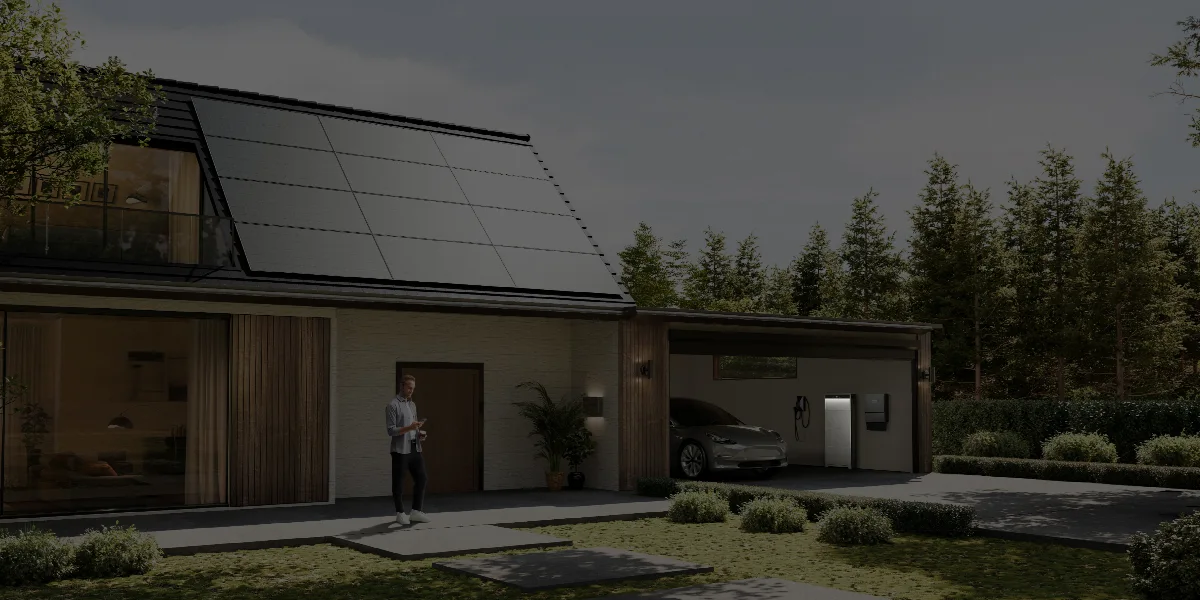
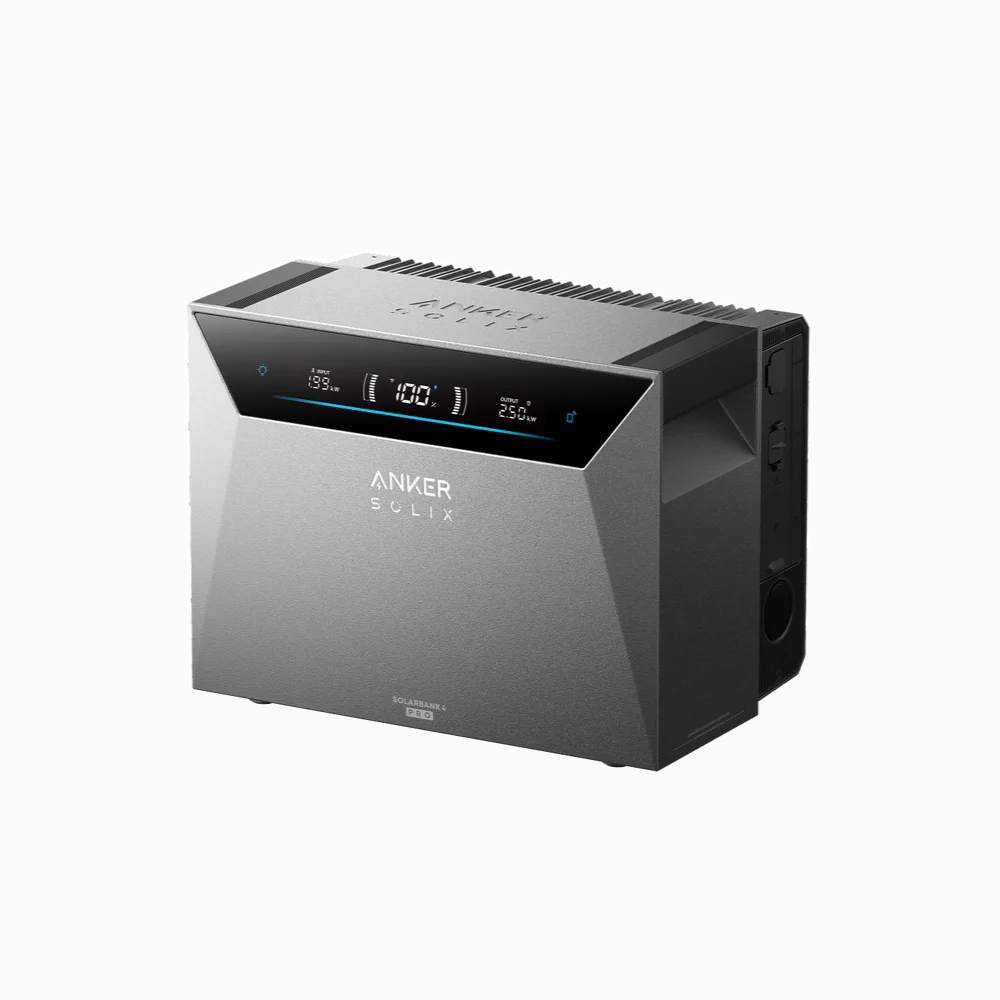
Ordinary grid-connected solar normally stops supplying your home during a power cut. Adding a battery does not, by itself, establish backup capability. Sources checked 30 September 2026.
Why the lights can go out even with solar
A home needs a suitable arrangement to operate safely when disconnected from the grid. The presence of panels on the roof does not establish that arrangement. The Energy Saving Trust’s solar fact check confirms that typical solar installations cannot power the home during an outage.
Ask the installer to describe the actual backup design. Product names and a large kWh rating do not tell you which circuits are supported.
The backup chain
Each part has to be present and correctly configured. Tesla, for example, offers Powerwall 3 without backup. It stores energy for daily use but will not supply the house when the grid fails.
In a backup-enabled system, ask whether your solar can recharge the battery during an outage. Tesla’s power-cut guidance makes clear that this depends on system configuration.
How long will the battery last?
Use energy available to the backed-up circuits, not the battery’s nameplate capacity:
Approximate hours = available AC energy in kWh ÷ average backed-up load in kW.
If 8 kWh is available and your selected loads average 0.5 kW, the simple estimate is 16 hours. At 2 kW, it is four hours. These are illustrative calculations with no solar recharge and a constant average load; real runtime varies.
A kettle or oven can briefly demand far more power than a router. The system must meet both the average energy requirement and the simultaneous power requirement. Leave an allowance for changing loads, startup demands and uncertainty.
Seven questions before paying for backup
- Which circuits and sockets will stay powered?
- What continuous output and startup loads can the design support?
- What happens during the changeover?
- Will this solar array recharge the battery while the grid is down?
- How much energy will be kept in reserve?
- How does the system recover if that energy runs out?
- Will the installer demonstrate the agreed operation at handover?
Reserve has a trade-off: holding more energy for an unexpected outage leaves less for everyday tariff shifting. Ask for both figures in the savings proposal.
Use the product guides to compare configurations, then the battery size finder to explore your needs. Backup work should be designed and commissioned by a qualified installer.
A little more clarity
Questions people ask
Will solar panels alone keep my house powered?
A typical grid-connected solar system does not power the home during an outage. You need equipment and an installation specifically designed for backup operation.
How long will a 10 kWh battery run a house?
It depends on usable energy available at the start, conversion losses and the average backed-up load. If 8 kWh is available at the AC output and loads average 0.5 kW, simple arithmetic gives 16 hours. This is an example, not a guaranteed runtime.
Published information supports your research. Your installer should confirm the exact product, suitability, scope and terms for your property.
Suggest a correction ↗Your next useful step
Put the information to work.
Take the questions that matter to your project, explore the numbers and decide what to ask next.