We have not carried out a hands-on test. Specifications below come from Tesla’s UK documentation; buying advice and worked examples are our own analysis. Advertised prices are dated examples; your total requires a written installation quote.
How much does a Tesla Powerwall 3 cost in the UK?
Published starting prices provide a useful first reference: Heatable advertises supply and installation from £7,395, while Octopus lists its 13.5 kWh Powerwall 3 installation from £7,999. We checked those pages on 30 September 2026; Octopus labels its pricing basis April 2026. These are advertised starting prices, not a nationwide average or a quote for your home. Confirm VAT treatment, backup equipment, coverage and exclusions in the final written price.
Ask at least two installers to price the same specification. A lower total is only useful if it includes the functionality you need. Start with this checklist:
- The exact Powerwall model, number of units and any Expansion units.
- Backup Gateway or the specified non-backup configuration, plus metering.
- Installation, commissioning, mounting and cable routes.
- Consumer-unit work and any changes to the circuits selected for backup.
- Grid-connection paperwork, any export limit and who handles the application.
- The total payable, VAT treatment, exclusions and payment schedule.
- Responsibility for aftercare, call-outs and warranty claims.
Ask for optional extras as separate line items. That makes the premium for backup, extra storage or a difficult cable run visible, rather than buried in one headline figure.
The Powerwall 3 specifications that matter
| Specification | Published figure | What to check |
|---|---|---|
| Usable energy | 13.5 kWh AC | How much remains for daily use after your backup reserve? |
| Nominal AC output at 230 V | Configurable up to 11.04 kW | What output is approved and commissioned at your property? |
| Grid charging, base unit | Configurable up to 5 kW | Can it refill within your cheap-rate window? |
| Solar inverter | Integrated; three MPPT inputs | How will your roof layout or existing inverter connect? |
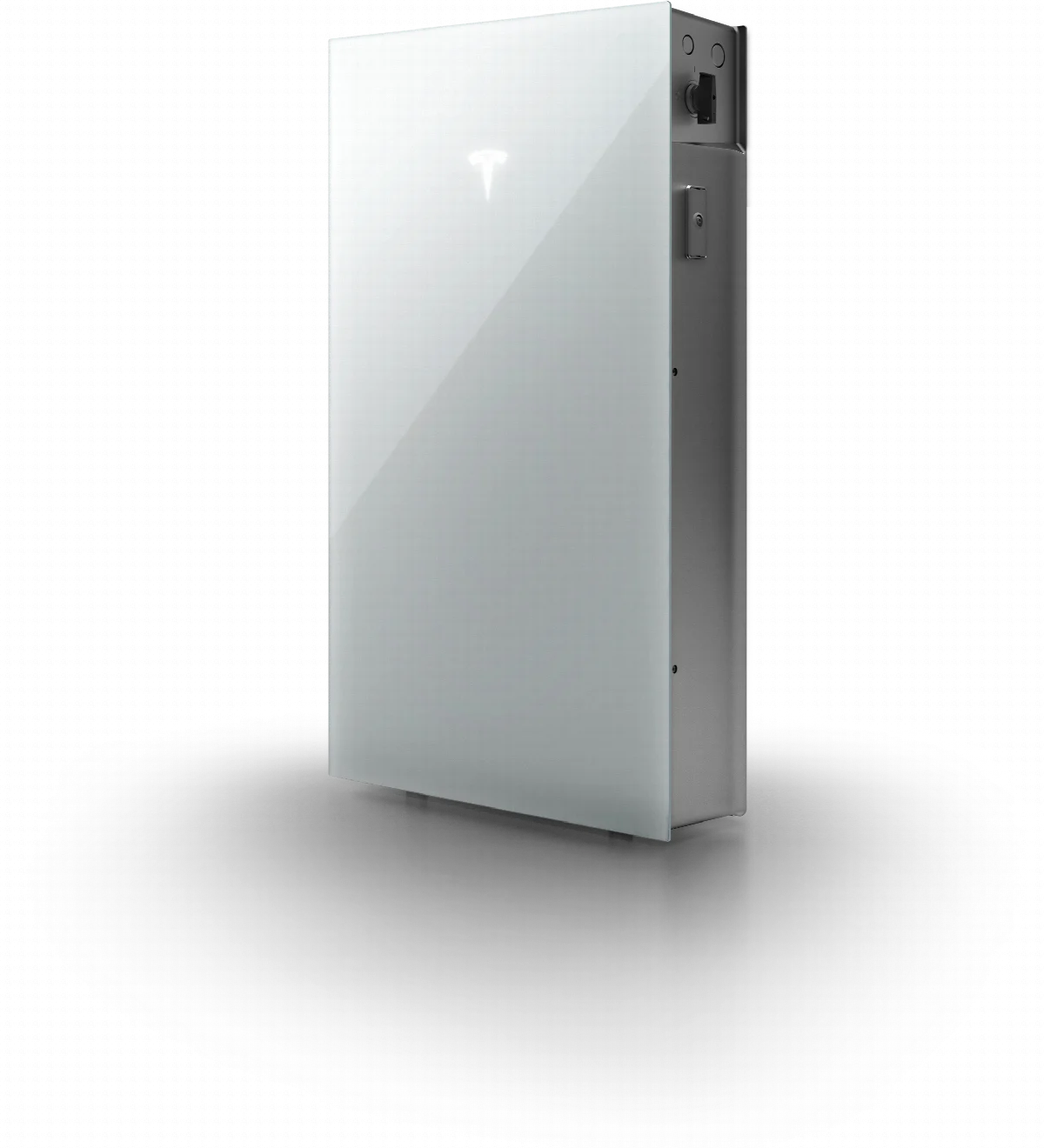
| Dimensions and mass | 1,105 × 609 × 193 mm; 130 kg | Allow for access, mounting and installation clearances. |
Source: Tesla Powerwall 3 UK datasheet. Figures depend on the conditions and configuration in that document. Charging power and discharging power are different limits.
A common mistake is reading 13.5 kWh as a promise that every appliance can run together. Storage determines how long you can supply a load; power determines which loads can run at once. Give the installer a list of your largest simultaneous loads, not just an annual bill.
A Powerwall is not automatically a backup installation
Tesla explicitly offers Powerwall 3 in a non-backup configuration. It can shift electricity use while the grid is operating, but it does not supply your home during a power cut. A suitable Backup Gateway is needed to upgrade that configuration to backup. See Tesla’s non-backup explanation.
Ask for a written list of backed-up circuits, the available output and the expected changeover behaviour. If you have solar already, ask whether that specific inverter can keep charging the battery during an outage. “Battery included” is not a sufficient answer.
Our guide to solar and batteries in a power cut explains the questions to put to an installer.
Is 13.5 kWh the right size for your home?
Start with half-hourly electricity use outside the cheap-rate period. If you only need to shift 4 kWh most days, more storage does not automatically create more savings. If you regularly use 12 kWh in the evening, the calculation is different.
For illustration, reserving 20% of 13.5 kWh for backup leaves 10.8 kWh before other operating constraints. That is simple capacity arithmetic, not a prediction of energy delivered in every situation. A reserve improves resilience while reducing the energy available for routine bill shifting.
Test the value of an upgrade separately. If an extra £2,000 of equipment only creates £100 of additional annual benefit, its simple incremental payback is 20 years. Those are illustrative figures, but the method helps you challenge an oversized proposal. Use the battery size finder as a starting point and ask the installer to validate it against your usage.
Read the UK warranty, not a headline from another market
The European warranty effective 3 December 2025 specifies 80% energy retention at ten years for the UK. Listed solar self-consumption, time-based control and backup uses have unlimited cycles; other applications have a 37.8 MWh throughput limit. Connectivity and registration conditions also apply. Read the full Tesla warranty and confirm which terms cover your proposed use.
Keep the invoice, commissioning record, serial numbers and installer contact details. Ask who diagnoses a fault and what happens if your original installer stops trading. A product warranty and an installer’s workmanship guarantee answer different questions.
Who should put Powerwall 3 on their shortlist?
It is worth a quote when your measured usage can make good use of the capacity, the proposed system fits your existing or planned solar, and its backup arrangement meets a specific need. Compare a smaller system too if your daily demand is modest.
Our assessment: judge the commissioned system and lifetime cost, rather than buying the maximum power figure on the brochure. A well-sized alternative may be better value even if its headline specification is smaller.
Next, read Powerwall 3 versus Sigenergy SigenStor, or check the savings maths for a battery without solar.
A little more clarity
Questions people ask
Can Powerwall 3 work without solar panels?
Yes. It can store grid electricity for later use. Savings depend on your eligible tariff, charging losses and how much higher-rate electricity the battery replaces. A non-backup installation will not power your home during an outage.
Is 13.5 kWh the same as 13.5 kW?
No. kWh measures stored energy; kW measures power delivered at a moment in time. Your quote should state both usable storage and the commissioned charge and discharge limits.
Does every Powerwall 3 installation include power-cut protection?
No. Tesla offers a non-backup configuration. Ask whether the quote includes the appropriate gateway, backup wiring and commissioning, and which circuits it will supply.
Published information supports your research. Your installer should confirm the exact product, suitability, scope and terms for your property.
Suggest a correction ↗Your next useful step
Put the information to work.
Take the questions that matter to your project, explore the numbers and decide what to ask next.